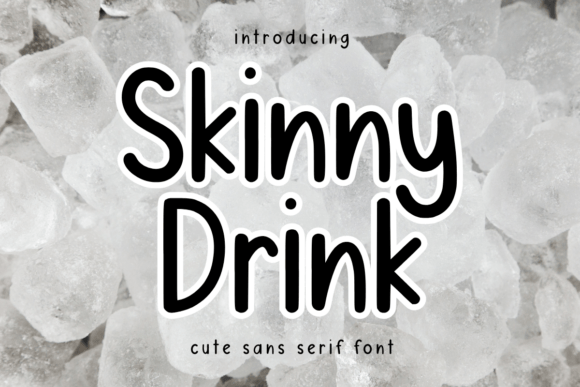
Skinny Drink
As a social media strategist working on a seasonal product teaser for a boutique wellness brand, I needed a sans serif that could communicate joy and approachability without feeling childish. That’s when I discovered Skinny Drink, a playful and cute sans-serif font that quickly became my go-to for light-hearted brand visuals. With its soft edges and inviting style, it’s perfect for brands targeting a young and cheerful audience. Here’s how it performed across real campaign assets.
Skinny Drink for Instagram Stories and Reels Covers
Skinny Drink shines brightest when used at medium to large sizes in social media visuals. For a recent Instagram Reels campaign promoting a summer self-care challenge, I used it for overlay text on pastel-toned video thumbnails. The rounded edges and open letterforms gave the text a soft, approachable feel that matched the brand’s aesthetic perfectly.
On mobile previews, the font remained highly legible even when overlaid on light background images. I found that using a subtle white outline helped maintain contrast against colorful or textured backgrounds. It worked especially well for short, punchy phrases like “Your Daily Dose of Calm” or “Start Your Glow Up.”
Using Skinny Drink for YouTube Thumbnails and Pinterest Pins
When designing a set of YouTube thumbnails for a creator’s new lifestyle series, I wanted to keep the design energetic but not overwhelming. I paired Skinny Drink with a minimalist sans serif for body text and found that the contrast between the two created a clear visual hierarchy.
In Pinterest campaign assets, where text overlays need to be instantly readable in fast-scrolling feeds, Skinny Drink delivered a fresh, modern charm. It stood out nicely on lifestyle imagery, especially when used for short headlines like “5 Morning Rituals to Try” or “Your Coziest Fall Vibes.” Just keep in mind that the font’s playful nature may not suit highly formal or corporate content.
Best Practices for Readability and Mobile Optimization
When using Skinny Drink in digital ad layouts or email banners, always test for legibility on mobile. Because it’s a display font, it works best for headlines, callouts, and short branded phrases rather than body copy. For mobile-first content, I recommend using it at 18px or larger when possible.
It also performs well with light or dark backgrounds, but avoid using it on busy images without a subtle drop shadow or text outline. I found that the font’s soft curves can get lost in cluttered visuals if not properly emphasized.
When Not to Use Skinny Drink in Brand Campaigns
While Skinny Drink brings a lot of charm to creative font palettes, it’s not suited for every situation. I quickly learned that it didn’t hold up well in dense infographics or long-form editorial design. Its playful and cute sans-serif font style is best reserved for short, high-impact text rather than paragraphs or technical content.
It also doesn’t work well for formal brand identities or corporate campaigns where a more professional tone is needed. If your brand leans modern minimalist or luxury lifestyle, you may want to consider a more neutral sans serif font or a refined serif font instead.
Font Pairing Tips for Brand Consistency
One of the most strategic uses of Skinny Drink came when I was building a branded template pack for a wellness influencer’s online course launch. I paired it with a clean, modern sans serif for subheadings and body copy, which balanced the playful tone with a sense of professionalism.
For logo design or packaging design, I’d recommend pairing it with a minimalist script font or a soft handwritten font to enhance its youthful appeal. If you’re working on web design or landing page headers, try using it for hero text and a neutral typeface for supporting content.
Checking Font Features Before Campaign Launch
Before exporting final files, I always check the included styles and file formats of any premium font. Skinny Drink comes with multiple weights and alternates, which gave me flexibility in adjusting the tone across different assets. It also supports multilingual characters, making it suitable for international digital products or client campaigns.
Be sure to confirm the commercial font licensing terms before using it in client work or branded content. Most designers overlook this, but it’s essential for legal compliance, especially in online shop campaigns or downloadable design assets.